Twilio
GET twilio.comDaily uptime
100.00%27 OctToday
No downtimePartial (95–99.9%)Major (below 95%)
Response time
avg 823 ms02 Nov 21:1314 Nov 04:5025 Nov 00:07
- Status
- Up
- Last response
- 200862 ms
- Checked
- Every minute
- Last check
- 4 mins ago
 Live · checked 4 mins ago
No, Twilio is up.
Twilio is responding normally. Last checked 4 mins ago, with 100.00% uptime over the last 30 days and an average response time of 823 ms.
Daily uptime and response times from SIOPS checks. Hover a bar or the chart for details.
Report what you’re seeing. Visitor reports help show whether a problem with Twilio is widespread or only affecting a few people, even before our checks pick it up.
This page shows live, independent monitoring for Twilio. SIOPS requests twilio.com every minute and records whether each check succeeds and how fast it responds.
The status at the top reflects the most recent check. Uptime is the share of successful checks per day, and response time is how long Twilio’s servers took to answer. Short dips can come from brief network issues; sustained red bars usually mean a real outage.
The cards and charts at the top of this page reflect our latest request to twilio.com. Check Last Updated beside them. If it's far behind the check interval, our data is out of date, so give Twilio's official status page more weight until this page catches up.
Twilio sits between your application and phone networks around the world. A message or call passes through your code, Twilio's API, then a carrier, then the recipient's phone. So "Twilio not working" can mean any of those. The usual signs are messages stuck as undelivered, calls that fail to connect, verification codes that don't arrive, or webhooks that stop reaching your server.
The uptime chart shows whether twilio.com answered each check. The response time chart shows how long it took. These describe Twilio's public website, not its API or the carrier networks your messages travel over. The API can be healthy while the website is slow, and the other way round.
A lone spike is usually network noise between our checker and Twilio. A cluster of slow checks deserves attention. Use the 7, 15 and 30 day views to see whether today stands out.
We request twilio.com from servers in more than one region, outside Twilio's network, on a fixed schedule. A short problem between checks may not appear.
Green means the website answered. We don't call the API, send messages, place calls, run verification, check carrier delivery or reach your webhooks. Every one of those can fail while twilio.com loads.
Twilio runs its status page at status.twilio.com. It lists Twilio's products separately and includes notices about specific carriers and countries, which matters because delivery problems are often local. Use it alongside ours. Our charts show whether twilio.com answers from outside. Twilio's page shows which product, carrier or region their team has confirmed is affected.
Carriers are a frequent cause. A carrier in one country can delay or filter messages while everything else works, and Twilio's status page often flags those.
Rules are the other big one. Registration requirements, content filtering and sender restrictions vary by country and can block delivery without any fault at Twilio. In your own setup, expired credentials, a webhook server that's down, or a change in your code are common causes.
Check Twilio's status page and the error code in your Console logs. A clear error code usually points to your request or setup.
The message log shows the error. Carrier filtering, unregistered senders and invalid numbers are common causes.
Check the logs for that number and whether the country's carriers are flagged on Twilio's status page.
Twilio needs your endpoint to answer. Check that your server is up and returning success.
Messages to Indian numbers need sender and template registration under local rules. Unregistered messages can be blocked.
Check the call logs for the error, and Twilio's status page for voice issues in that region.
These checks come from SIOPS, an independent uptime monitoring service. We have no affiliation with Twilio, and the results here come from our own requests to twilio.com, not from Twilio's status page.
No, Twilio is up. This is based on SIOPS’s latest check at 24 Nov 2026, 18:37 UTC. The status updates automatically as new checks come in.
Twilio is responding normally to our checks, so the problem may be limited to your network, region, device or account. Try switching networks, updating the app, clearing its cache or signing out and back in.
Use the “Report a problem” form on this page: choose where you noticed it (app, website, API, login, notifications, payments or something else) and describe what went wrong. You can leave your email if you’d like an update. Reports from visitors help show whether an issue is affecting everyone or just a few people.
SIOPS checks twilio.com every minute from outside Twilio’s network and records the response code and response time of every check.
Twilio has had 100.00% uptime over the last 30 days, with an average response time of 823 ms.
Uptime is the percentage of successful checks over a period. 99.9% uptime over 30 days means about 43 minutes of downtime that month.
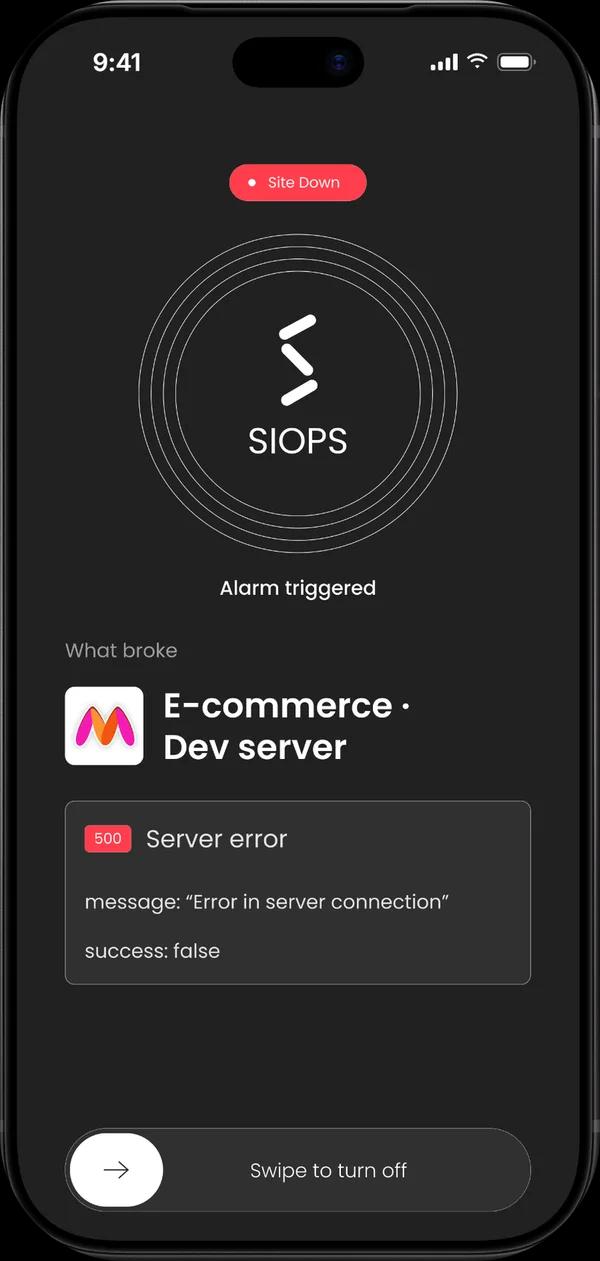
Install the SIOPS app on iOS or Android to monitor your own websites and servers with loud alarms that bypass Silent Mode, plus Slack, email, phone call, push and webhook alerts.
Checking Twilio is free. Monitor your own websites, APIs and servers and SIOPS will ring like an alarm the moment they go down.